Turn “What can I claim?” into a clear, 5-minute professional conversation
Most deduction questions don’t need an hour of research.
They need clarity, consistency, and defensible logic.
The TaxFitness occupation deductions advisory system gives accountants ready-to-use, occupation-specific deduction guidance for 500+ Australian occupations, so you can respond to clients with confidence, not caveats.
No guesswork. No Googling. No vague “it depends.” Just practical, ATO-aligned deduction fact sheets you can rely on.

Why this works in practice
Most deduction disputes arise because:
- clients rely on anecdotes (“my mate claims it”),
- staff give inconsistent answers,
- or the logic behind a decision isn’t explained clearly.
Occupation-specific context changes the conversation.
It helps you explain:
- what is commonly claimed,
- what is usually disallowed,
- what attracts ATO scrutiny,
- and what evidence is actually required.
That shifts the discussion from opinion to professional judgement.

Where it fits in TaxFitness
The occupation deductions advisory system is one module within TaxFitness, alongside:
- Tax planning tools
- Top 20% business benchmarking
- Business advisory frameworks
You can use it:
- During individual tax return preparation
- For salary and wage reviews
- As part of new staff onboarding and training
- When responding to ATO queries or reviews
- To standardise deduction conversations across your firm
It’s there to make life easier for you, your team, and your clients.
What the system actually does
The occupation deductions advisory system provides a structured, repeatable way to handle deduction conversations with salary, wage, and contractor clients without getting bogged down in one-off research.
For each occupation, you get a clean, one-page fact sheet that clearly sets out:
- Role overview & typical work context
- Common deductible expenses
- Common non-deductible expenses
- ATO risk areas & audit flags
- Evidence and record-keeping checklist
- Practical claim examples
You’re not promising “maximum refunds at any cost.”
You’re giving clients sensible, supportable deductions, and protecting yourself at the same time.
Sample occupation fact sheets
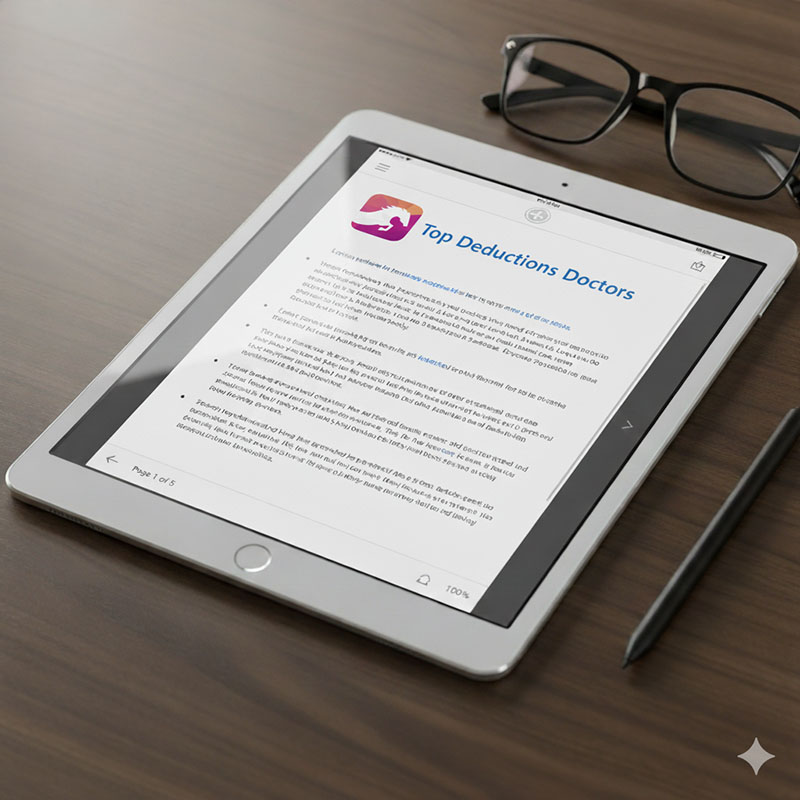
Here’s what a typical one-pager covers — practical, plain-English, and designed for real client use:
- Nurses
- Uniforms, shoes, CPD, registrations, shift-based travel, what’s in/out, and high-risk claims to avoid.
- Electricians
- Tools, vehicles, travel between sites, workwear, home-office use, plus common non-deductible areas.
- Teachers & Education Professionals
- Classroom resources, PD, home prep, excursion travel – and clear lines around private vs work expenses.
- Truck Drivers
- Long-haul vs local, meal and travel rules, logbook expectations, and ATO hot-spots for the industry.
- Retail & Hospitality Staff (e.g. café workers)
- Uniforms, shoes, limited self-education, technology use – and why most “I use it at work” claims fail.
Inside the software, each occupation is presented as a concise, one-page fact sheet, suitable for:
- client explanations
- internal training
- staff reference

What it’s designed to support and what it’s not
This system is designed to:
- support professional judgement
- improve consistency
- reduce risk and friction
- save time on repetitive deduction questions
It is not designed to:
- justify aggressive claims
- override substantiation requirements
- replace tax law or professional judgement
That distinction is deliberate.
The bottom line
This isn’t about claiming more. It’s about explaining better, deciding consistently, and protecting your firm.
If that’s how your practice approaches deductions, the occupation deductions advisory system fits naturally into your workflow.
Want to see how firms use this day-to-day?